Borrowing Ideas, some Pros and Cons, and Design Patents
Yes, I get it. We all want to share ideas, and that's a good thing. But let's face it. Sometimes we invest tons of thought and years of development into a design — a mask, a costume, a character look — and it's legitimately not a good thing for a competitor to just copy it and sell it cheaper. There's a legitimate reason to be able to share ideas, but on the whole it's good to allow the creators of important IP to benefit from their creations. At least for a while.
Which brings me to the subject of this post: design patents. A relatively unknown type of patent. Actually, people think they know about them, but they really don't. We'll cover other ways to protect designs another time.
What Is a Design Patent?
A design patent protects how something looks, not how it works.
Let me give you an example. US Design Patent 274,387 was granted to a pretty well-known name, at least if you're in the haut couture industry — Oleg Cassini:
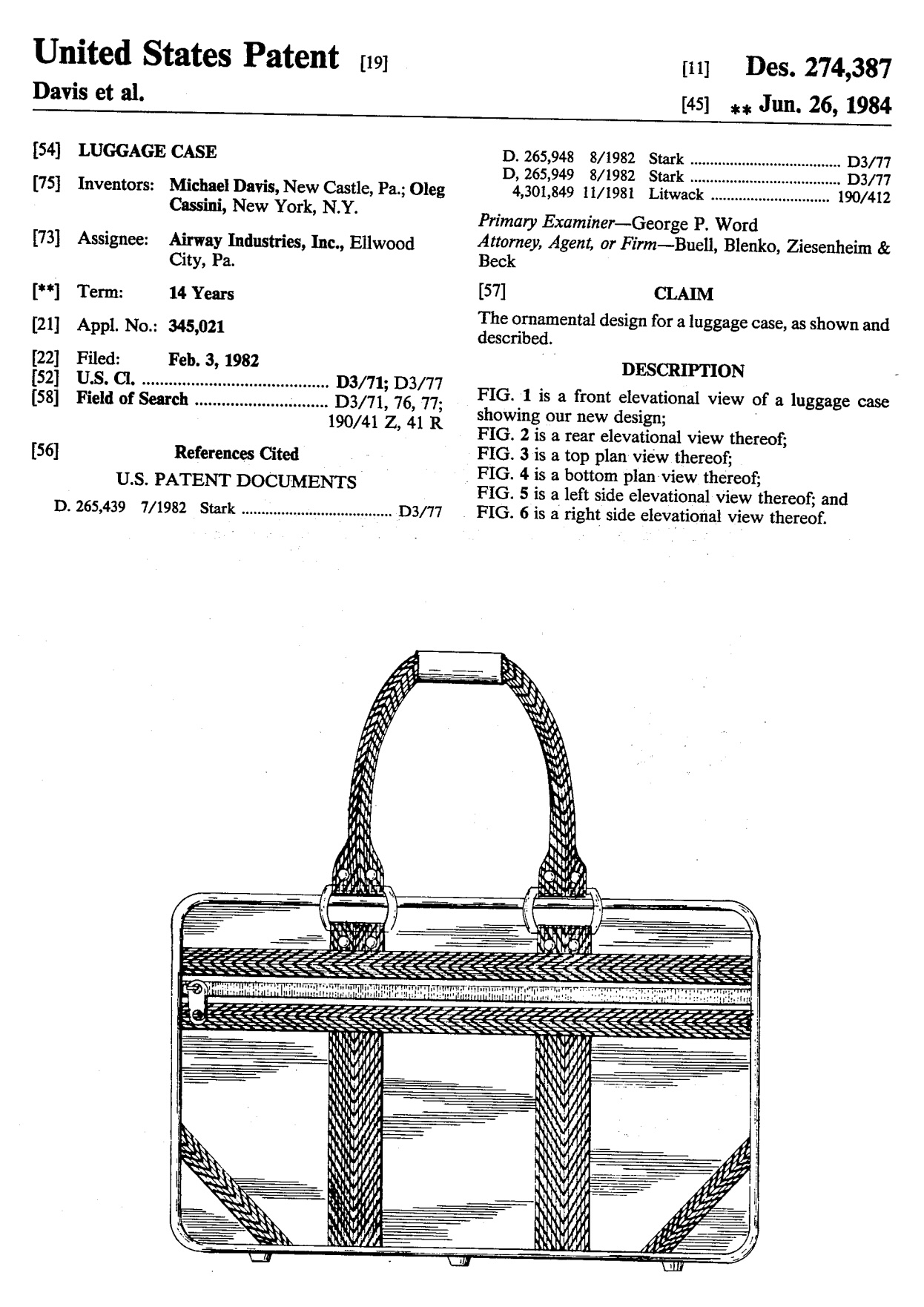
Oleg Cassini is one of the biggest names in design, and has design patents across a number of different industries: purses, perfume bottles, clothing, and so on.
Design Patents are intended to advance the useful arts, as the Constitution provides at Article I, Section 8 — but in particular, they are intended to advance the ornamental features of the useful arts. And they give their inventors the exclusive rights to those designs for a period of fifteen years from the date of issuance. (Note: the term was fourteen years for patents issued before May 13, 2015; it is fifteen years for those issued on or after that date.)
What This Has to Do with the Haunt Industry
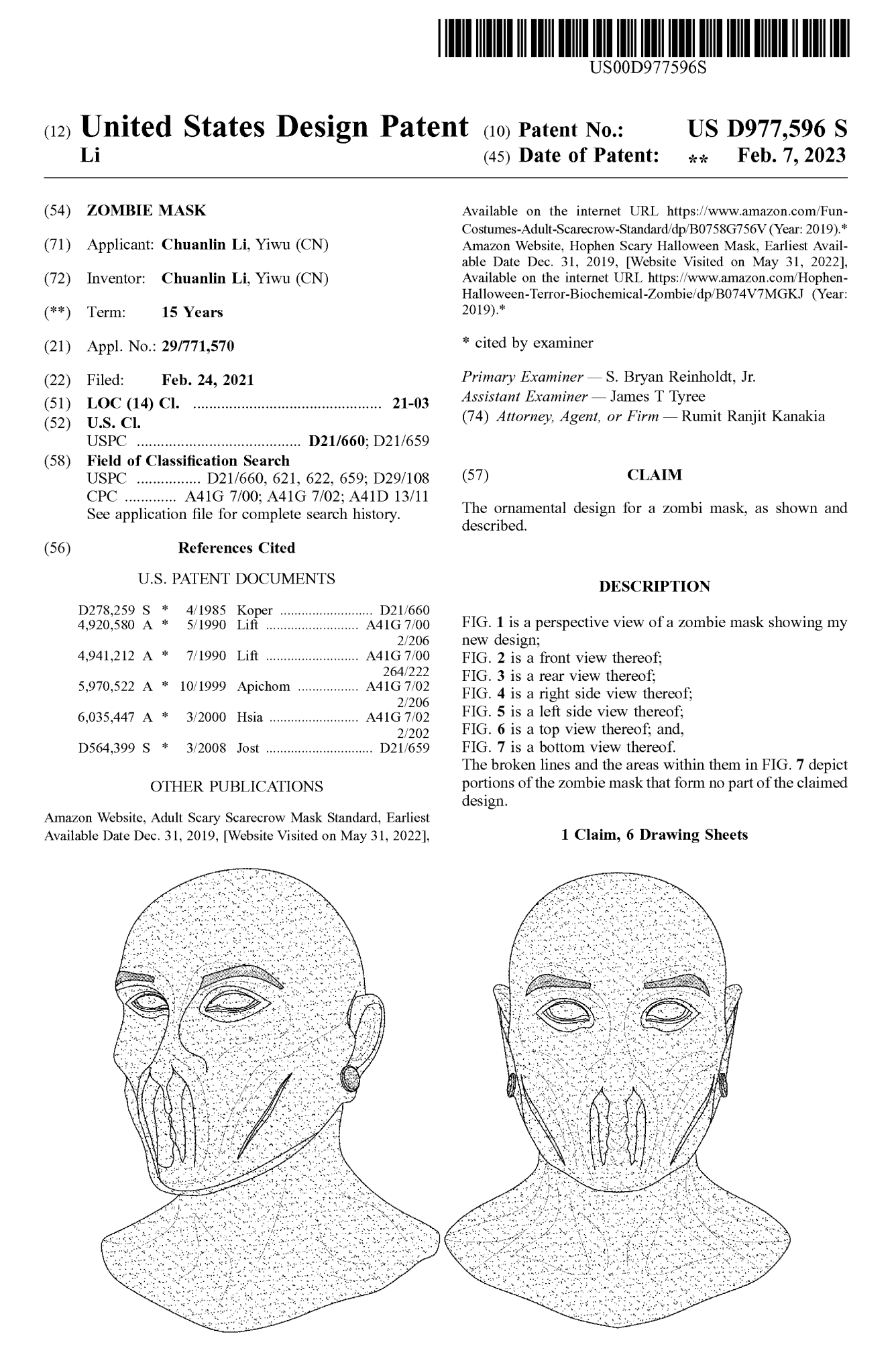
Companies that design and sell masks, costumes, and props — to haunted attractions, Halloween retailers, and the public — invest real creative effort in their products. A distinctive zombie mask or witch costume can be a significant commercial asset. If a competitor simply copies that design and sells it at a lower price, design patent protection is one of the tools available to stop them. Consider these examples:
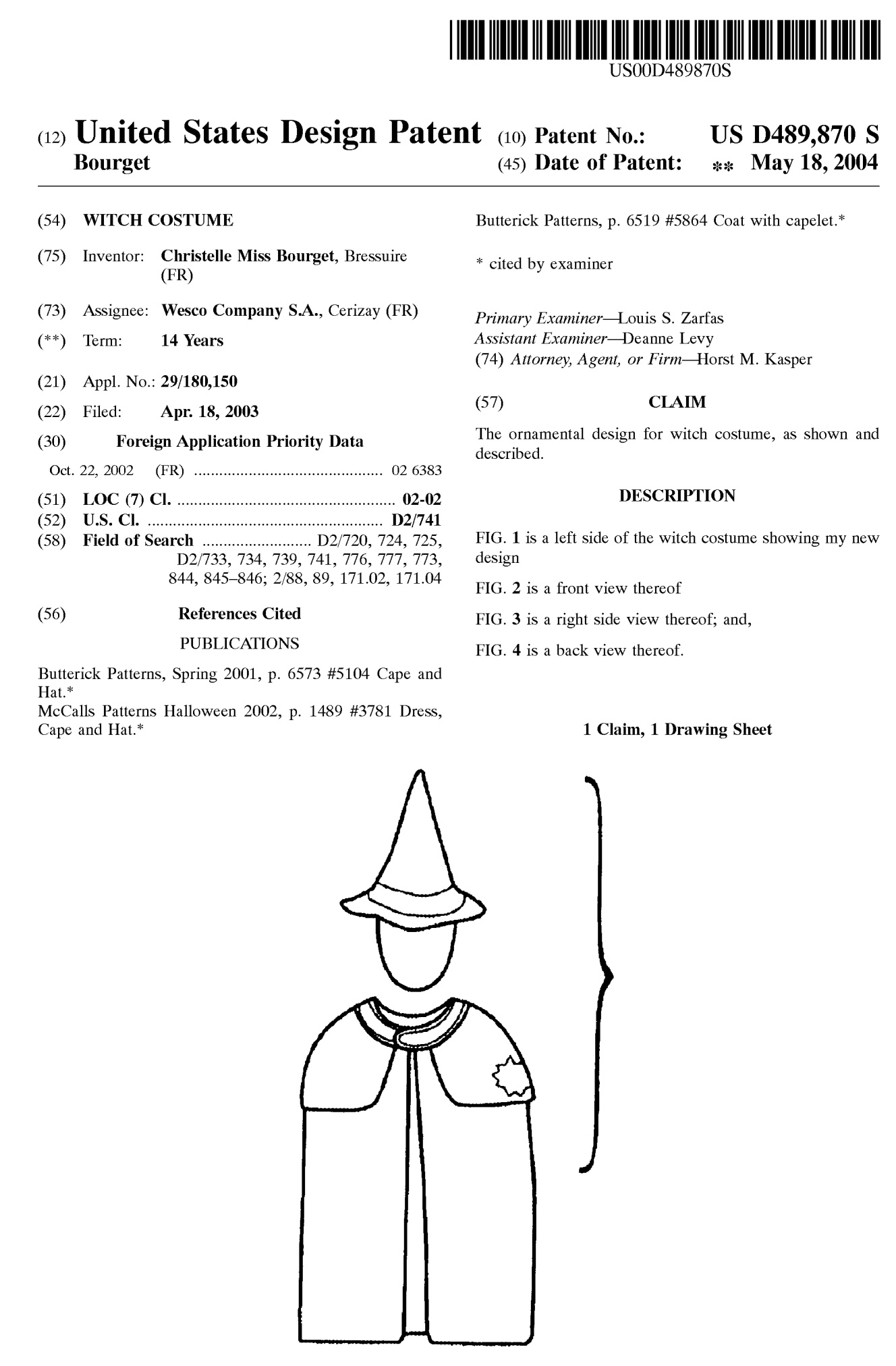
But it's not just masks. It's also costumes:
What You Can and Cannot Do
Now you may be saying: "What do you mean? I can't make a zombie mask or a witch costume?"
No — that's not what this means. You just can't make one that looks exactly like the ones in the patent. By "exactly like," I mean you can't make ones that follow the design according to the solid lines that define the design as claimed. The dotted lines in a design patent are only there to provide context — they are not part of the claim.
If, however, you create a mask or costume that follows the solid lines of a patented design, you are arguably infringing that patent. Not to say that you will necessarily get in trouble for doing so. As a practical matter, few people or organizations are aware of all intellectual property that exists in a given space, and even fewer conduct searches before adopting a design. What this means practically is that the patent holder has a duty to inform you of the infringement if they wish you to stop — and that notification generally comes in the form of a cease and desist letter. Frankly, small infringements are usually not worth the effort to pursue.
So, for example, with the witch costume: if one did not include the portion above the main cape —
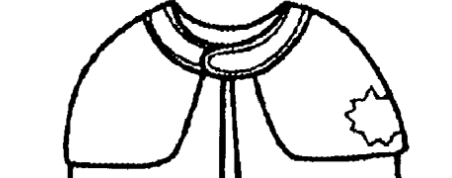
— or if one did not include the star situated on that portion —

— one might arguably be able to avoid infringement of that costume patent.
In the case of a zombie mask, if one avoided having a mouth area of a particular shape —
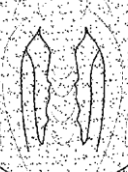
— or a particular shape of an earring portion —
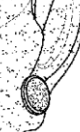
— one might well be said to avoid that patent as well.
The Doctrine of Equivalents
It all comes down to what is claimed — and what is claimed is what's in the solid lines of the design patent. If you don't include what's formed by the solid lines, you have a strong argument for non-infringement of the claim literally.
There may still be a scope of the doctrine of equivalents to contend with, and this often depends on what prior art the patentee had to overcome in order to obtain issuance of their patent. That means: what designs were invented before that of the patentee, what designs were found by the patent examiner or cited by the patentee to the Patent Office during prosecution, and consequently what the patentee had to argue over in order to distinguish their design from the prior art.
If the initial claim was too broad, the patentee may have had to add more solid lines — narrowing the scope of their claim, and making the claim more specific — in order to show that their design was different from what already existed. This is called narrowing the claim to avoid the prior art, and it is a standard technique in patent prosecution. If the patentee narrowed their claim in this way, they may find it harder later to argue that a design that doesn't include all of the specific features is still an infringement under the doctrine of equivalents.
So Should You Get a Design Patent?
Which brings me back to the initial point. If you are a mask or costume manufacturer with a distinctive design that competitors might be tempted to copy, a design patent is worth considering.
That said, design patents are an expensive and relatively short-lived protection. Depending on how important a particular design is to your business and how long its commercial life is likely to be, it may or may not be worthwhile to pursue. It is, however, important to be aware that it exists.
Other ways of protecting designs will be explored in later posts — including trade dress, trademark, copyright, and so on. Some of these last much longer than a design patent but may require more in the way of proof of use. In many cases, a combination of these different tools may be most useful, offering protection in different dimensions and at different stages of a product's commercial life.
One Particularly Powerful Remedy
One particularly interesting aspect of design patent law is that if you prevail, you are not necessarily limited to your own lost profits. Under 35 U.S.C. § 289, a design patent holder can recover the total profits the infringer made from the sale of any article to which the patented design has been applied.
What this means in a manufacturing context: if a competitor copies your zombie mask design and sells thousands of units — to haunts, to Halloween stores, to the public — you may be entitled to a portion of the profits they made on those sales, not just the sales you can prove you lost. That is a potentially significant remedy.
This is not to say that such a theory would be easy to establish, or that it is always the best avenue. But it is a powerful one that should be understood and considered as part of any broader strategy to protect a distinctive design.
This post is general legal information, not legal advice. Intellectual property law is highly fact-specific and jurisdiction-dependent. Consult a licensed patent attorney before making any decisions about design patent protection for your characters or costumes.